A good timber floor is one of the few surfaces in a home that improves with care and can last generations. But every sand removes a little material, so a fair question follows: how many times can a floor be sanded before it needs replacing?
The answer comes down to one thing more than any other — the thickness of the wear layer, the timber sitting above the tongue-and-groove join. Here’s how to read your floor and make a confident call.
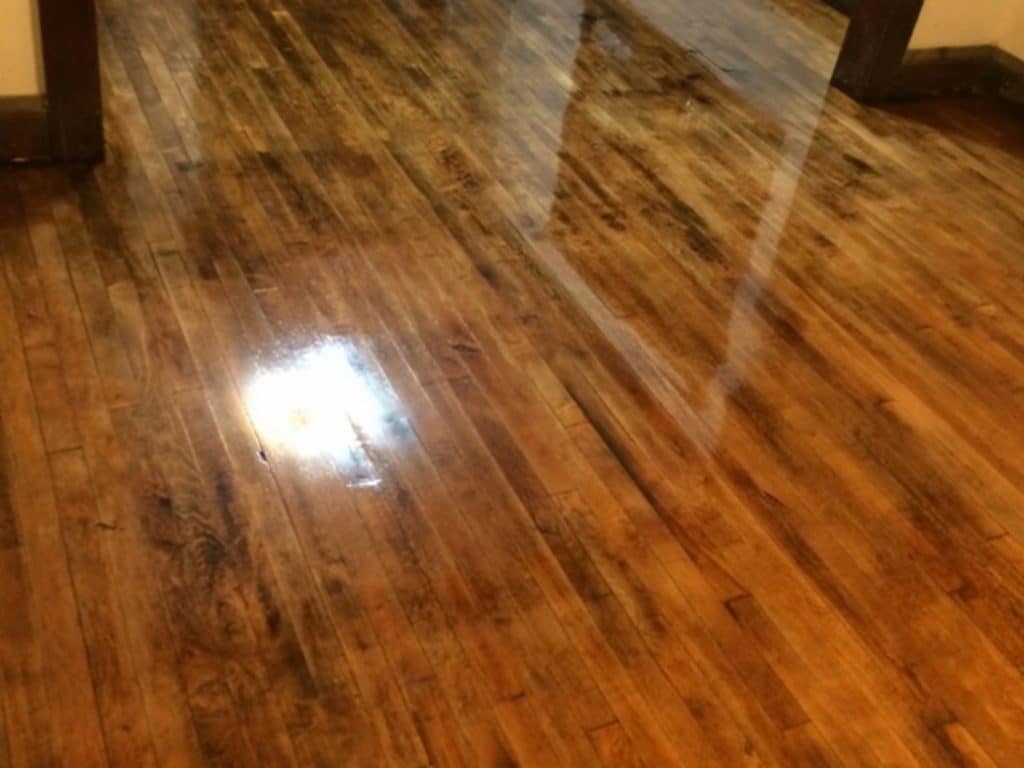
Solid timber: usually six to eight sands
Most solid hardwood floors can be sanded around six to eight times across their service life. A traditional sand removes roughly 0.8–1.6 mm of material each time.
Because solid boards in Australia are typically 19–22 mm thick with a generous wear layer above the tongue, there is plenty to work with. The practical limit arrives when the wear surface gets close to the tongue — sand past that and you expose nail heads (“shiners”) and risk splitting the groove edges.
Most homeowners never use all those sands. Solid floors usually only need a full sand every 10–25 years with normal traffic, and between full sands a buff-and-recoat refreshes the surface without removing timber.
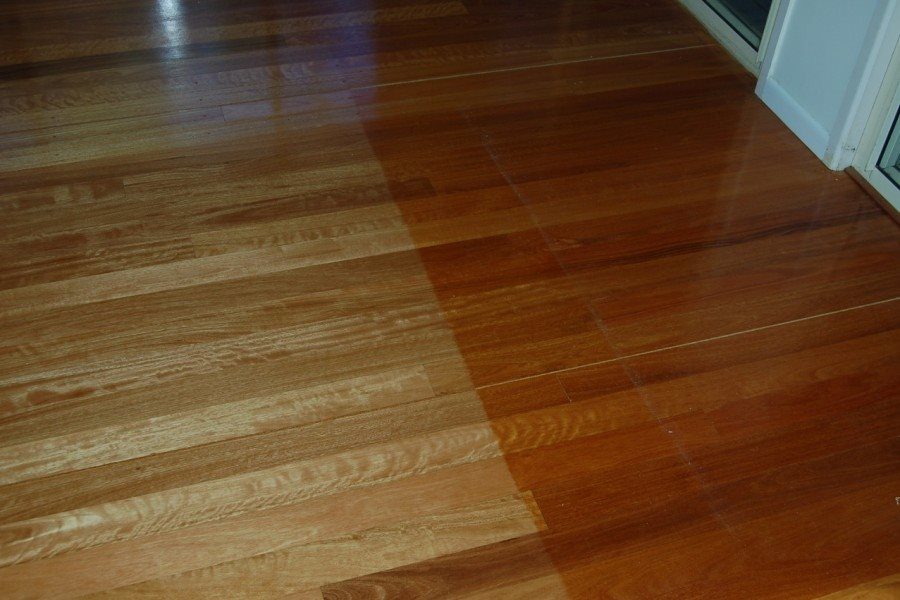
Engineered timber: it depends entirely on the veneer
Engineered boards have a real hardwood top layer bonded to a stable ply core. The wear layer is much thinner, so the rule changes:
- Under 2 mm: generally should not be sanded at all.
- 2 mm: about one careful sand.
- 3 mm: roughly two to three sands.
- 4–6 mm: around three to five sands — close to a solid floor.
A premium engineered floor with a thick veneer can be refinished several times; a budget board with a 1 mm wear layer may have none to give. If you don’t know your veneer thickness, a professional can gauge it before any machine touches the floor — sanding through to the ply is a costly, irreversible mistake. Our guide to engineered vs solid timber flooring explains the difference in depth.
How to tell your floor is near the end
Look for these signs that the wear layer is running low:
- Nail heads or staples becoming visible between boards.
- Splintering or broken edges along the groove side of boards.
- Boards that flex underfoot or the tongue becoming visible where boards meet.
- A putty knife slipped into a gap shows very little timber above the tongue.
If you can see fasteners, the floor has likely been sanded as far as it safely can.
The Melbourne period-home angle
In Melbourne’s inner east — Surrey Hills, Camberwell, Hawthorn, Kew — many original Baltic pine floors are 80 to 110 years old and have already been sanded a few times across their lives. Pine is softer than hardwood, so each sand needs a light, even hand to preserve what’s left. We routinely find period floors that still have one or two careful sands in them, which is often all that’s needed to bring them back. We explore this in our guide to restoring Baltic pine and period-home floors, and handle the hands-on work through our timber floor renovation specialist service.
When replacement is the smarter choice
Refinishing wins on cost and character almost every time, but replacement makes sense when:
- More than around 30% of the floor is damaged.
- Boards are cupped, rotted or water-damaged beyond sanding.
- The subfloor is failing (persistent squeaks, sagging, movement).
- Termite or significant structural damage is present.
- The floor has simply been sanded too many times.
Sometimes the right answer is a hybrid — replacing damaged boards, then sanding the whole floor so old and new blend. A like-for-like board match matters here, especially with heritage Baltic pine widths.
Why an on-site assessment matters
Deciding whether a floor can take another sand isn’t a guess — it’s a measurement. We check wear-layer thickness in several spots, inspect the fasteners and assess the subfloor before recommending anything. If your floor has life left, we’ll tell you; if it doesn’t, we’ll say so.
See our timber floor refinishing and timber floor sanding services, and if a fresh floor is the answer, our solid timber floor installation team can help.
Frequently Asked Questions
How many times can a solid wood floor be sanded?
Usually six to eight times over its life, since each sand removes only about 0.8–1.6 mm and solid boards have a thick wear layer above the tongue.
Can engineered floors be sanded?
Only if the hardwood veneer is thick enough — about 2 mm allows one sand, while 4–6 mm allows three to five. Veneers under 2 mm generally shouldn’t be sanded.
How often should I sand my floors?
Most solid floors only need a full sand every 10–25 years. A buff-and-recoat between sands extends the life of the timber.
How do I know if my floor can’t be sanded again?
Visible nail heads, splintered groove edges and flexing boards are signs the wear layer is too thin for another sand.
Is refinishing cheaper than replacing?
Almost always, because replacement adds the cost of new timber, removal, disposal and installation on top of finishing.
Find out how much life is left in your floors
Not sure how much your floors have left to give? We’ll measure the wear layer and give you an honest recommendation. Book a free on-site check with Iconic Flooring.