Polished concrete costs between $45 and $85 per square metre in Melbourne, depending on the finish. A grind and seal starts at $45/m², a honed finish runs $65/m², and a full mechanical polish is $85/m². For a typical 100m² open-plan living area, that puts most jobs between $4,500 and $8,500.
Those are our actual rates, not a national average. Most quotes you will find online come from directory sites listing a range of $50 to $180 per square metre, which is technically true and completely useless when you are trying to budget a renovation.
Below is what each finish costs, what pushes a quote up or down, and what a cheap number usually leaves out.
Polished concrete prices in Melbourne, 2026
| Finish | Per m² | 50m² | 100m² | 200m² | Best for |
|---|---|---|---|---|---|
| Grind & seal | $45 | $2,250 | $4,500 | $9,000 | Garages, workshops, budget-conscious living areas |
| Honed finish | $65 | $3,250 | $6,500 | $13,000 | Homes, retail, anywhere you want a soft matte look |
| Full mechanical polish | $85 | $4,250 | $8,500 | $17,000 | High-traffic commercial, gyms, showrooms, forever floors |
Totals are indicative and calculated at the list rate. Two adjustments apply in practice:
- Small jobs carry a loading. Under about 30m², expect 10–15% more per square metre. Getting a crew, a planetary grinder and a dust extraction system to site costs the same whether the floor is 20m² or 200m².
- Large jobs come down. Over 300m², the per-metre rate drops. Over 500m², it drops meaningfully. Ask us for a rate rather than assuming the table applies.
What is included at every tier: site protection, dust-extracted grinding, the full grit progression for that finish, densifier, edge work, and a clean handover. What is not included: removing whatever is currently on the floor, and slab repairs. Both are covered below.
Book a free on-site measure. We will look at your slab, tell you which finish it will actually take, and give you a fixed number. Call 0473 837 777 or request a quote.
Why our rates sit below the published ranges
If you have been reading around, you will have seen higher numbers — $50–$110 for grind and seal, $90–$155 for a true polish. Those ranges are real. Two things make the difference here.
We run our own crew out of Oakleigh. There are no subcontractors taking a margin between you and the person holding the grinder, and no lead-generation fee baked into the quote. The second reason is less flattering to the industry: a lot of published pricing assumes a sales visit, a design consultation and a markup on materials. We price the work.
What actually changes your quote
Six things move the number. In rough order of how much they matter:
1. What is on the floor now
If your slab is bare, you skip this entirely. If it is not, removal is the single biggest variable in the quote.
| Existing floor | Removal cost per m² |
|---|---|
| Carpet and underlay | $10–$20 |
| Vinyl or lino | $15–$35 |
| Ceramic tile | $20–$40 |
| Porcelain tile | $25–$50 |
| Stone tile | $30–$60 |
| Adhesive and glue residue | $15–$30 |
Tile glue is the one that surprises people. Removing tiles is straightforward; removing what was under them is not. Old black adhesive in particular grinds slowly and eats diamond tooling. If a quote for a tiled room does not separately price glue removal, ask why.
2. Slab condition
A flat, sound, well-finished slab polishes at the list rate. A slab that has been sitting under carpet since 1978 usually has not been. What adds cost:
- Cracks. Fine cracks fill and become part of the floor’s character. Structural cracks need assessment first and will not disappear.
- Level. If the slab falls more than a few millimetres across a room, it needs grinding flat before it can be polished, and that is extra passes.
- Patches. Old plumbing trenches, removed walls and kitchen relocations leave patches that polish a different colour to the original slab. Sometimes that looks good. Sometimes it needs an overlay, which adds $45–$50/m².
- Moisture. Older Melbourne slabs, particularly on the Peninsula and in anything pre-1970, often have no vapour barrier. We test before we quote a sealed finish.
3. How much aggregate you want exposed
The deeper we grind, the more stone shows through, and the more passes it takes.
- Cream finish — barely any aggregate, closest to the slab’s natural surface. Cheapest, and the finish is at the mercy of how the slab was poured.
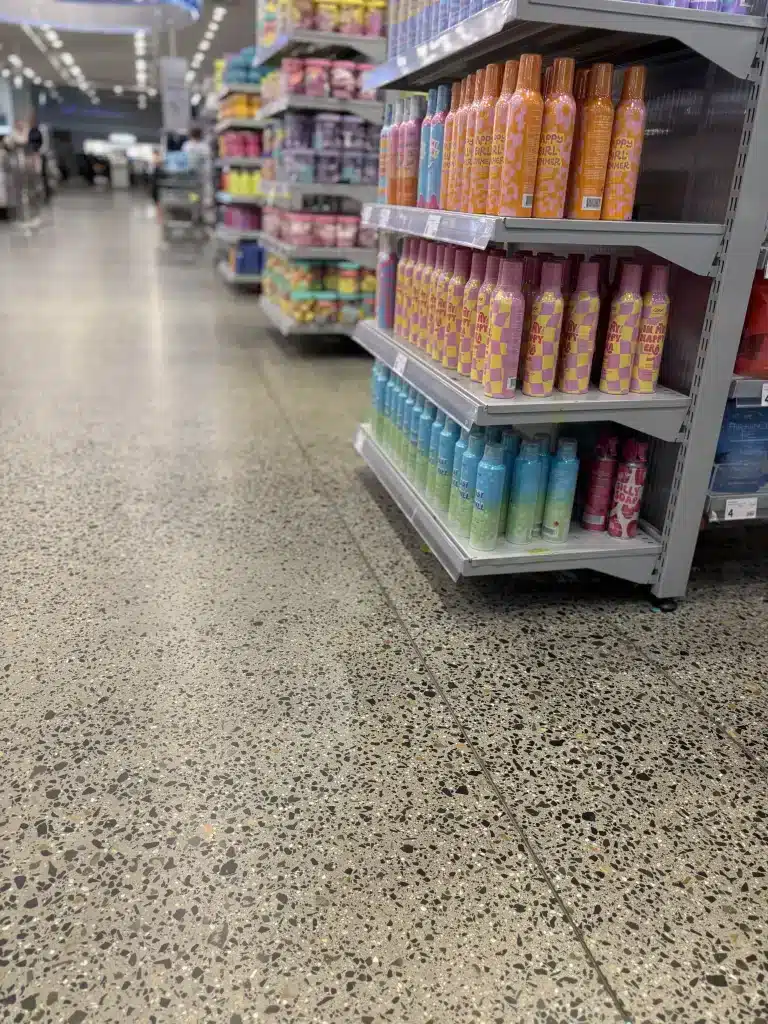
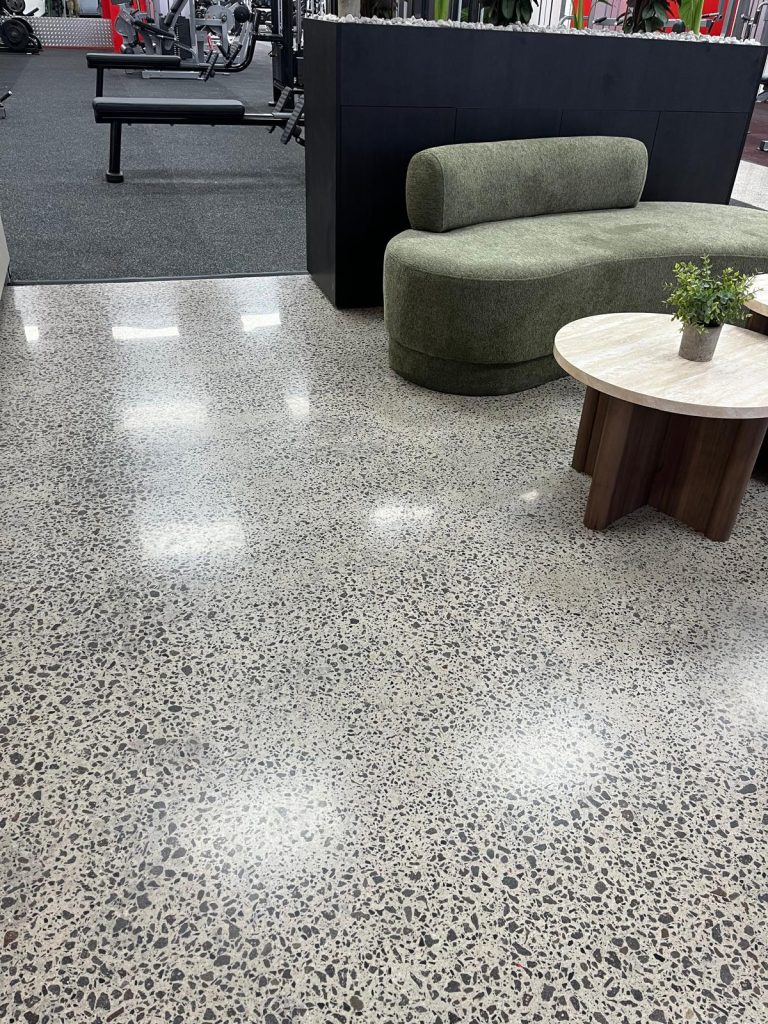
- Salt and pepper — a light grind exposing fine sand and small stone. The most popular residential choice, and the most forgiving.
- Full aggregate — a deep grind showing the large stone. The most dramatic look and the most expensive, because it is more passes and there is no going back if the slab is not suitable.
We will tell you honestly which of these your slab can deliver. Not every slab can do full aggregate, and a contractor who promises it without looking is guessing.
4. Edges, cuts and obstacles
A big empty rectangle is cheap per square metre. A floor broken up by an island bench, a stair base, six doorways and a built-in wardrobe is not, because edge work is done with hand tools and it is slow. Expect a loading on rooms with a lot of perimeter relative to floor area.
5. Access
Ground floor with a driveway is straightforward. First floor with no lift, a narrow staircase, or a job that can only run after 6pm in an occupied building all add labour. Commercial after-hours work carries a premium, but it is usually cheaper than closing for three days.
6. Area
Covered in the table above, but worth repeating: per-square-metre rates fall as area grows. The setup cost is fixed, so a 400m² warehouse floor is materially cheaper per metre than a 40m² kitchen.
Residential vs commercial pricing
The rate card is the same. The economics are not.
Commercial floors are usually larger, more open and less interrupted by cabinetry, so they sit at the efficient end of every variable. A 500m² warehouse or retail floor will come in well under the residential per-metre rate. Against that, commercial work often carries requirements residential does not: after-hours or weekend scheduling, staged handover so the business keeps trading, slip-resistance certification, and coordination with a builder’s program.
On slip resistance specifically — if the floor is in a commercial space, a wet area, or anywhere the public walks, it needs to meet a rated finish. We hold P4 certification and finish to 800 grit where slip rating matters. It is worth asking any contractor for their rating before you compare their number to ours, because an unrated floor is cheaper for a reason.
A real job, with the real number
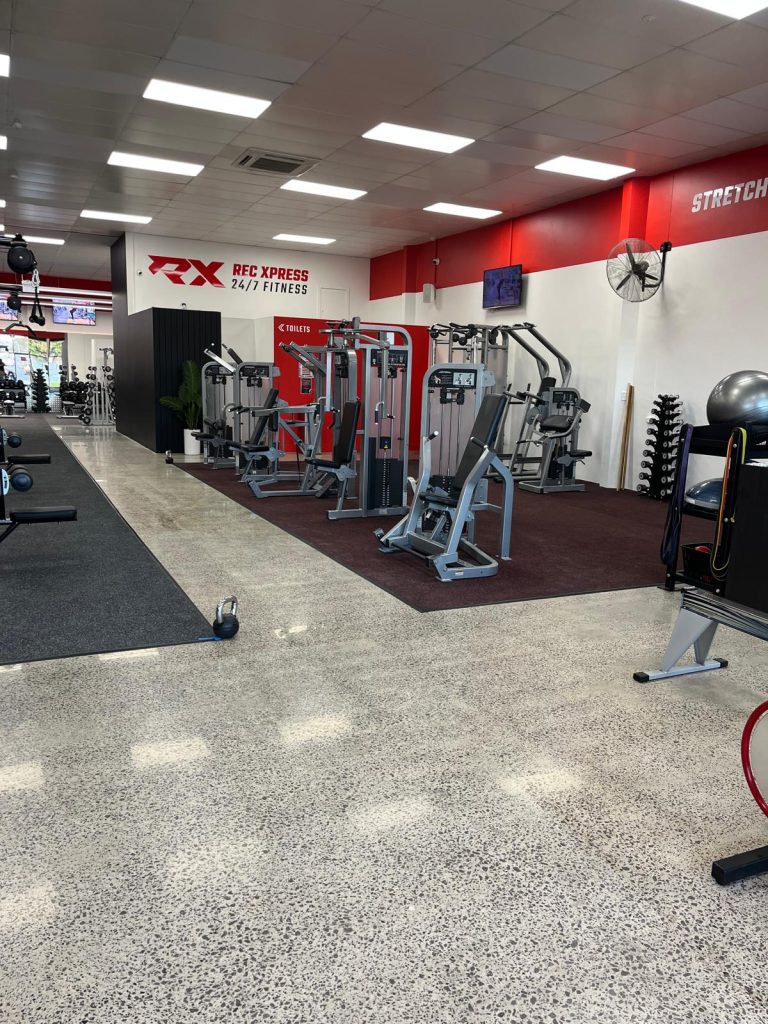
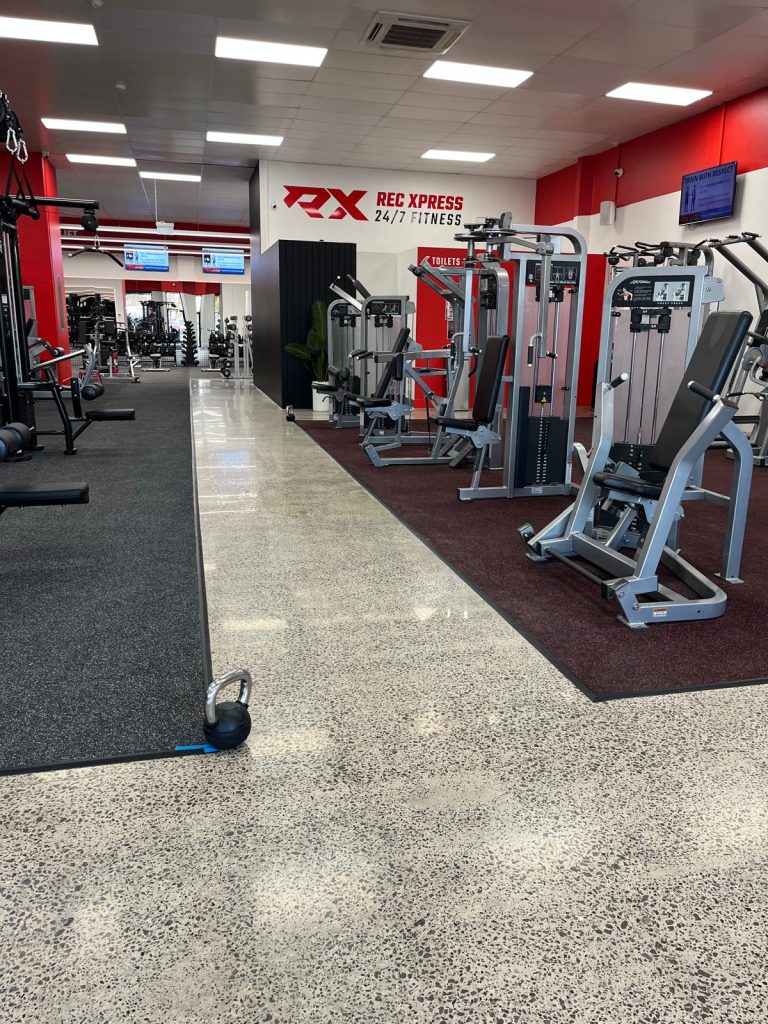
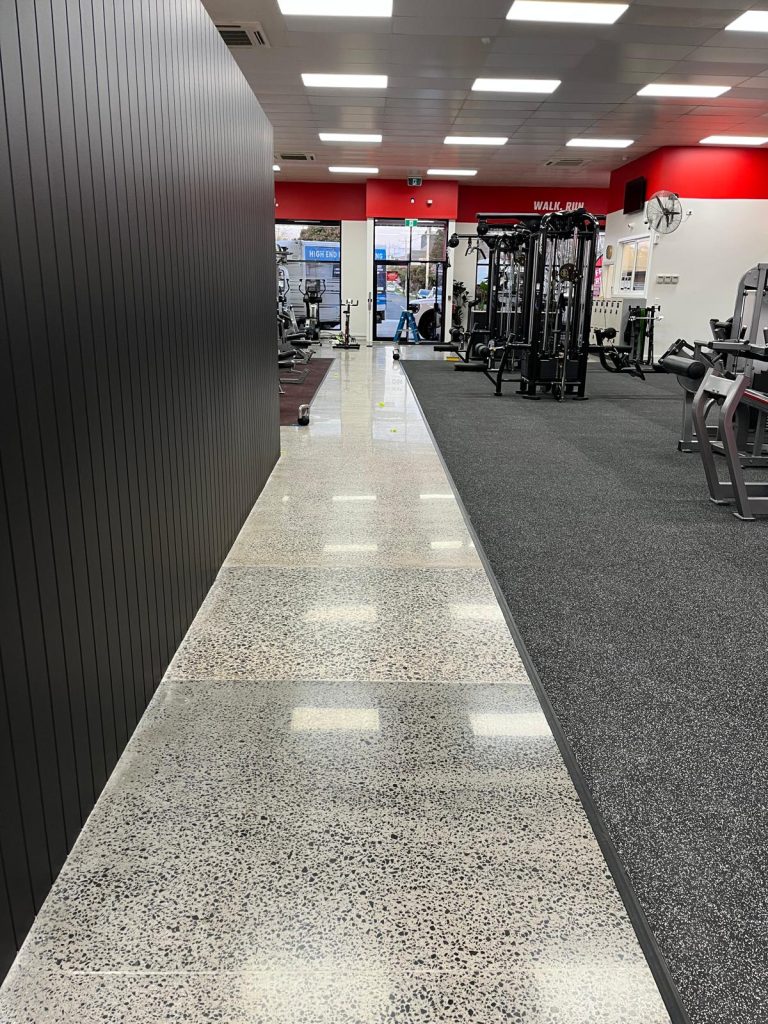
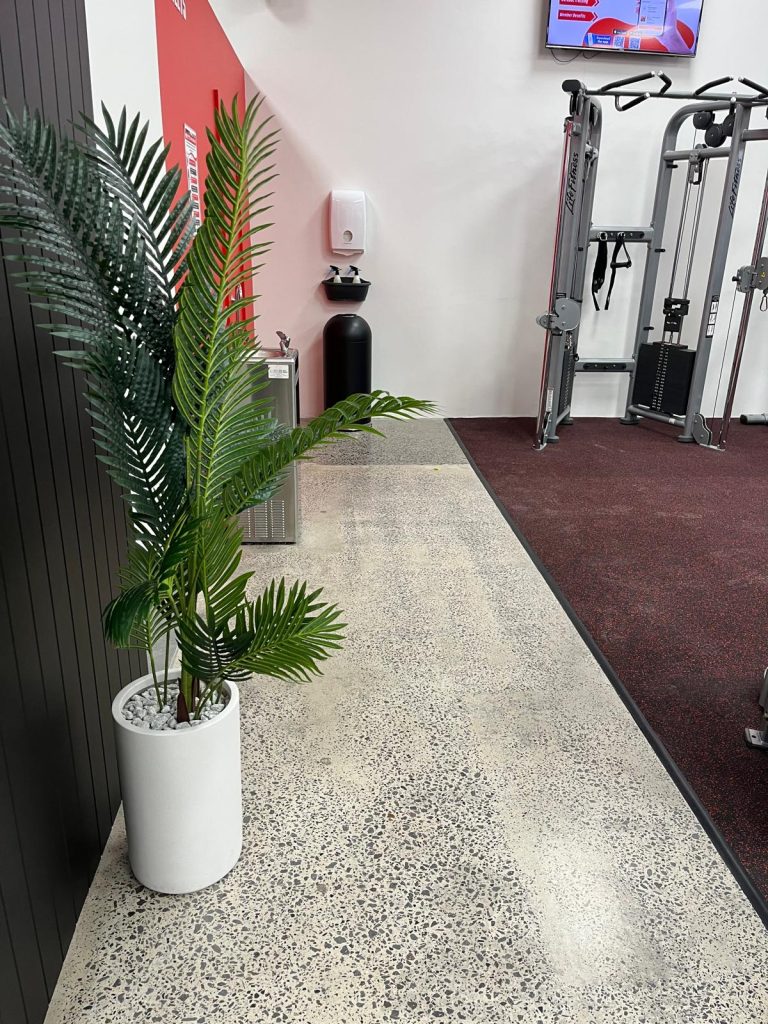
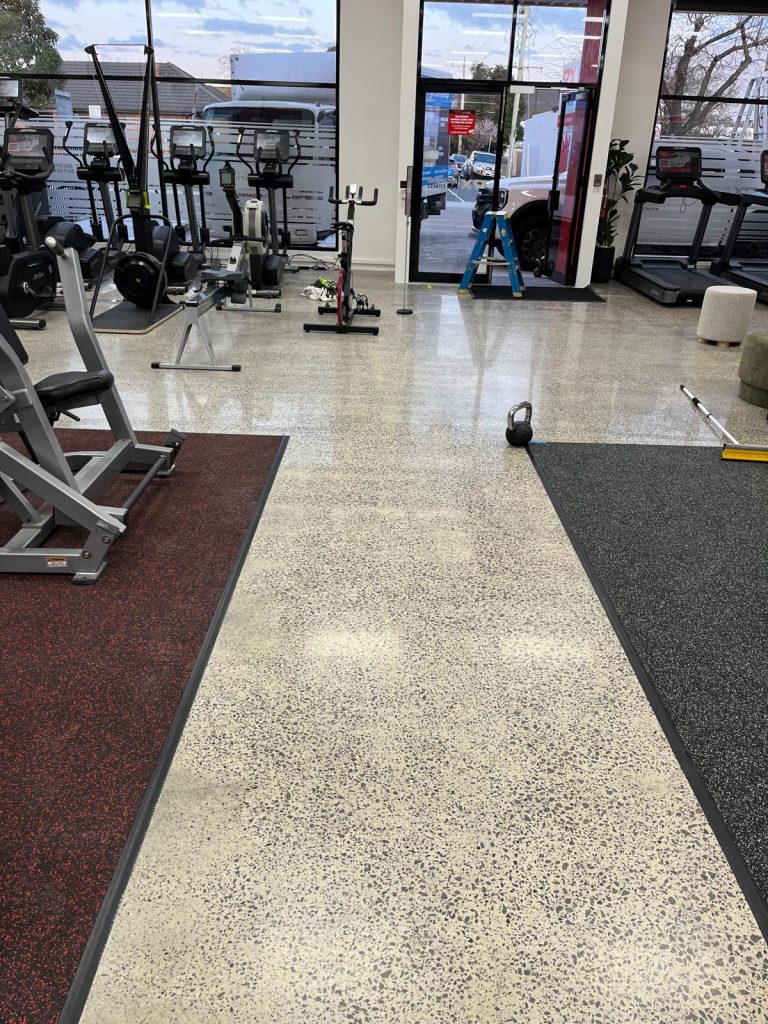
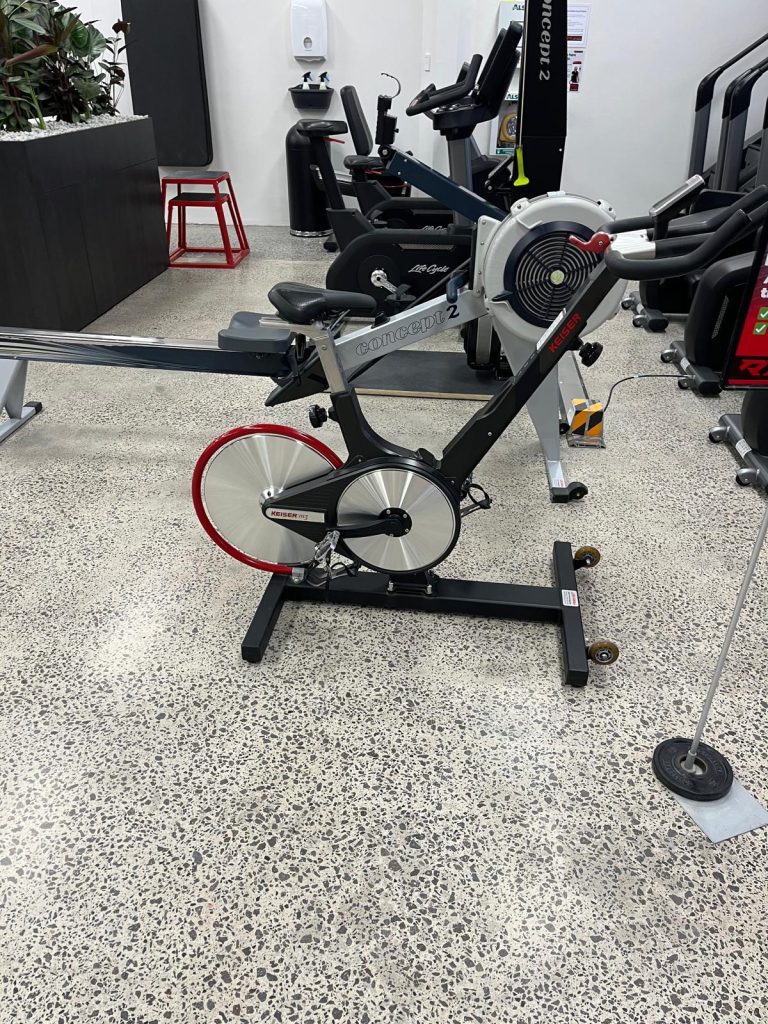
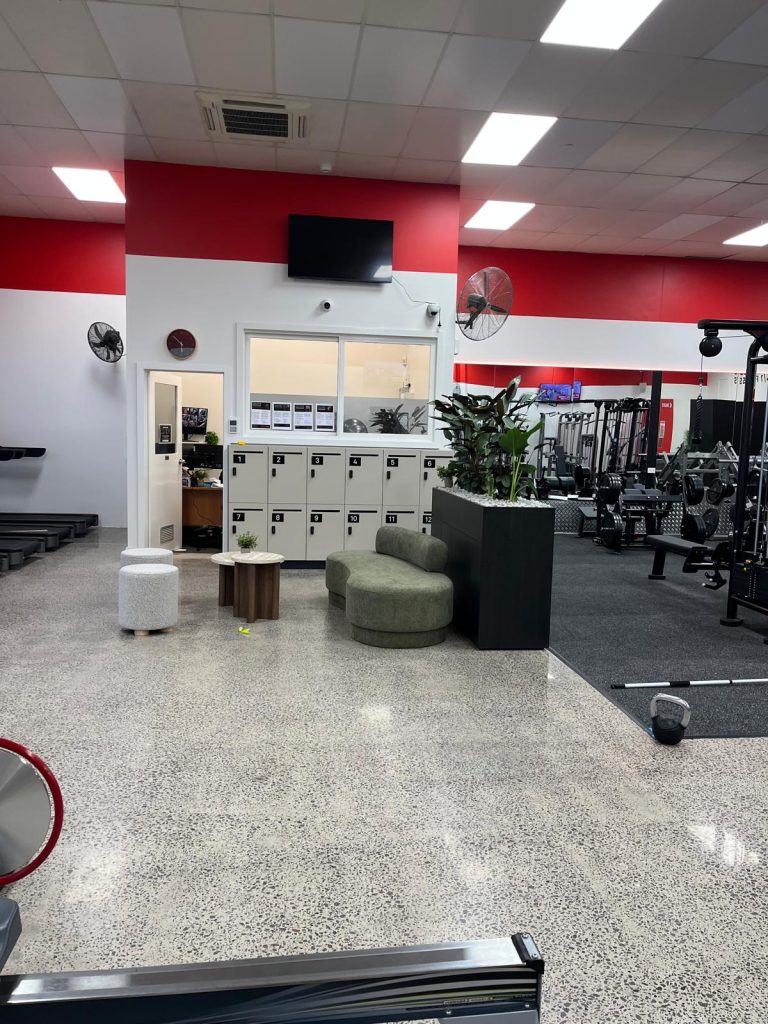
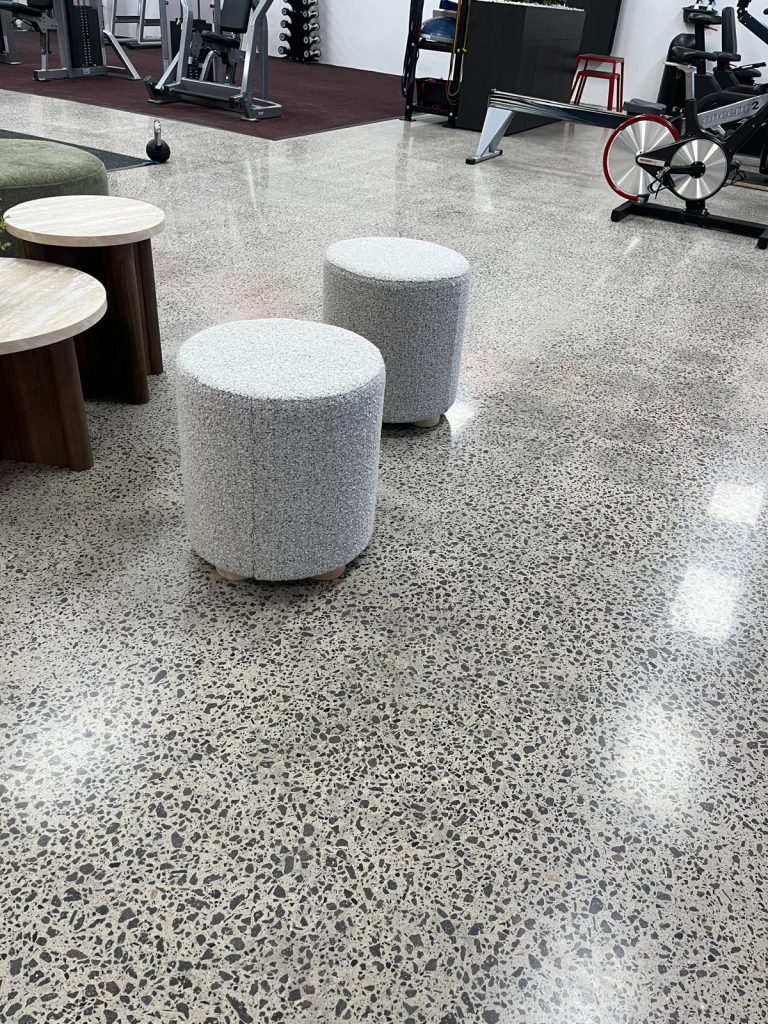
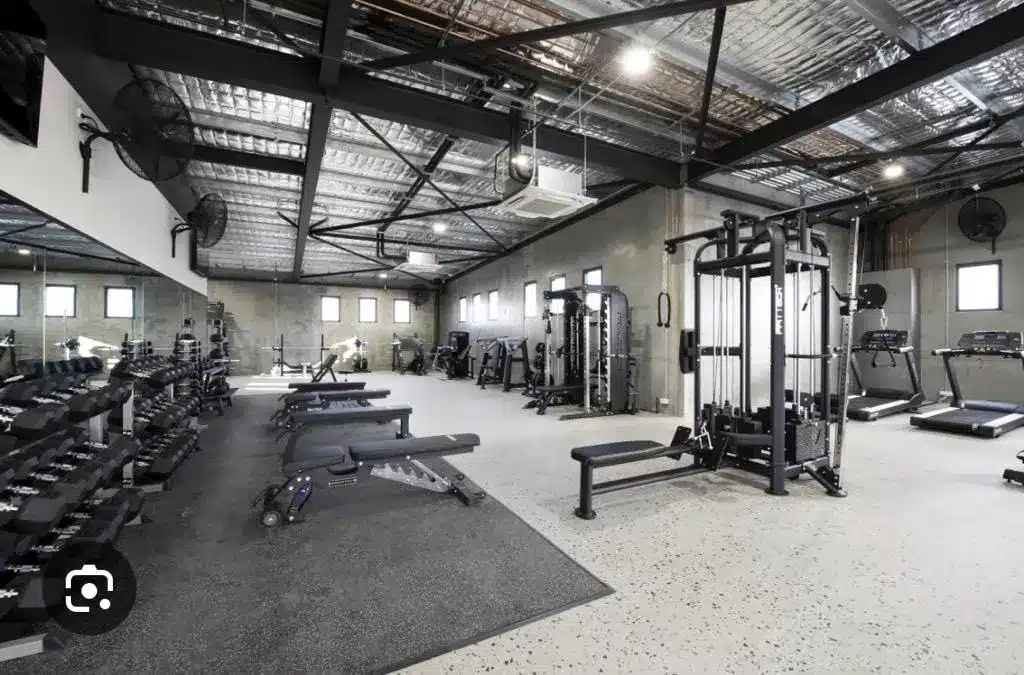
A gym fit-out, 122m², full mechanical polish to 800 grit for slip resistance. $10,065 including GST. That is $82.50 per square metre.
What that covered: grinding an existing slab flat, filling and colour-matching two old plumbing trenches, the full grit progression to 800, densifier and impregnating sealer, edge work around a mirrored wall and a squat rack bay, and P4 slip certification. The floor went in over four days around the fit-out program, with the last pass on a Saturday so the gym could open Monday.
Why it came in under the $85 list rate: it was a single open space with minimal perimeter and good access. That is the area effect working in the client’s favour. You can see more finished floors in our project gallery.
The ten-year cost, not the install cost
Polished concrete looks expensive next to laminate and cheap next to stone. Neither comparison is useful, because flooring costs are not one number — they are an install cost plus whatever the floor asks for over the next decade.
| Floor type | Installed per m² | Maintenance over 10 years | Rough 10-year cost per m² |
|---|---|---|---|
| Full mechanical polish | $85 | None. Clean it. | ~$85 |
| Grind & seal | $45 | One recoat at $30–$60/m² | $75–$105 |
| Epoxy | $50–$100 | Topcoat once, more in high traffic | $80–$160 |
| Vinyl plank | $50–$110 | Usually fine, replace at 10–15 years | $50–$110 |
| Laminate | $55–$110 | Swells if it gets wet; often replaced by year 10 | $110–$220 |
| Tile | $84–$210 | Regrouting, cracked tiles | $100–$240 |
| Engineered timber | $140–$220 | One recoat at $30–$40/m² | $170–$260 |
| Solid hardwood | $150–$280 | Recoat at 7–10 years | $180–$320 |
Installed figures for tile, timber, laminate and vinyl are 2026 Melbourne supply-and-install ranges published by other trades, included here for comparison rather than as our pricing.
The number that surprises people is the gap between the two concrete options. A grind and seal is half the price on day one, but the sealer is a coating and coatings wear — in a busy hallway or a commercial space you are looking at a recoat every five to ten years at $30–$60 per square metre. A mechanical polish is not a coating. The shine comes from the concrete itself being ground and densified, so there is nothing to wear off and nothing to recoat.
Over ten years the two land in roughly the same place. Over twenty, the polish is clearly cheaper. So the honest way to choose is not price — it is whether you want to spend less now or less later, and whether the floor is somewhere that will actually take a beating.
One more thing the table does not capture: a polished slab is the floor you already own. You are not buying a material, shipping it, and putting it on top of a perfectly good slab. For a renovation where the concrete is already there under the carpet, that is the cheapest good floor available to you, and it is the reason we get so many calls from people who have just pulled up the lounge room carpet and found a slab underneath.
What a cheap quote usually leaves out
If one number comes back well below the others, it is worth finding out why before you take it. The common omissions:
- Removal and glue. Quoted on a bare slab when your floor is tiled. This reappears as a variation once the tiles are up.
- Slab preparation. Grinding flat is priced separately, or not at all, and the quote assumes a slab nobody has looked at.
- Edge work. A price per square metre that quietly excludes the perimeter, which is the slowest part of the job.
- Densifier. Skipping it saves money and produces a floor that dusts and marks within a year.
- The grit progression. “Polished” covers everything from three passes to eleven. A floor stopped at 200 grit and sealed is not the same product as one taken to 800, and it will not look the same in two years.
- Slip rating. No rating means no certification, which matters legally in commercial and practically in a wet area.
- GST. Always ask whether the number includes it. A 10% difference between two quotes is often just this.
- Dust control. Dry grinding without extraction is faster and cheaper for the contractor. It puts silica dust through your house, and it is a serious health issue, not a mess issue.
We quote after looking at the slab, and the number we give you is the number you pay unless you change the scope. If we find something under your tiles that changes the job, we tell you before we proceed, not after.
Book a free on-site measure. We will assess the slab, tell you which finishes it can actually take, and give you a fixed price in writing. Call 0473 837 777 or request a quote.
Frequently asked questions
Is there a minimum job size?
We take on jobs from around 15m². Below about 30m² expect a 10–15% loading per square metre, because mobilising a crew and equipment costs the same regardless of floor size.
Do your prices include GST?
Yes. Every figure on this page includes GST, and our written quotes show it separately.
Does the slab need to be new?
No. Most floors we polish are existing slabs, many of them decades old. What matters is condition, not age — we test for level, cracking and moisture before quoting a finish.
Can you polish concrete that has tile glue on it?
Yes. Glue removal is priced separately at roughly $15–$30 per square metre depending on the adhesive. Old black adhesive is the slowest and the most expensive. It is always worth doing properly, because glue residue telegraphs through a polished finish.
How long does the job take?
A 100m² residential floor typically takes three to four days. Add a day if there is floor covering to remove, and another if the slab needs significant repair. The floor is walkable the same day it is finished and takes full furniture load after about 48 hours.
Can I stay in the house while you work?
Usually yes, if the work is confined to one area. We use dust-extracted grinders and seal off the work zone. Whole-house jobs are easier if you can be out for a few days.
What is the difference between grind and seal and polished concrete?
Grind and seal applies a protective coating over a ground slab. Mechanical polishing densifies and refines the concrete itself so the shine comes from the material, not a topcoat. The coating will need replacing; the polish will not. Full detail on our grind and seal page.
Do you work outside inner Melbourne?
Yes — CBD to Frankston to Epping, including the Mornington Peninsula, the eastern suburbs and bayside. See our concrete floor polishing page for the full service area, or find your suburb on our areas we serve page.
Get a straight number
Every slab is different, and no honest contractor can price your floor from a phone call. What we can do is come out, look at it, tell you what it will take, and put a fixed price in writing at no cost.
Call 0473 837 777 or book a free on-site measure.
Related reading: Concrete floor polishing services · Grind and seal · Commercial flooring · Epoxy flooring · How much does floor sanding cost in Melbourne? · Our projects · Contact us