Once you have decided to refinish, there is one decision left that changes everything about how the floor looks, how it wears, and how much you notice it day to day. It is not the timber. It is the finish.
Two identical Tasmanian oak floors in the same Camberwell house will look like different products depending on the sheen level and the coating chemistry. One will read warm and traditional. The other will read pale and contemporary. Neither is wrong — but choosing on a sample card in a showroom, without understanding what each system actually does, is how people end up disappointed.
Iconic Flooring is certified across Bona, Synteko and Loba, which means we select the system for your floor rather than applying whatever one brand we are tied to. Here is how we think about it.
Sheen Level: What You Are Really Choosing
Sheen is a measure of how much light the surface reflects. It is largely an appearance decision, but it has a very practical consequence: the shinier the floor, the more it shows. Scratches, dust, footprints, pet hair, and every imperfection in the boards underneath.
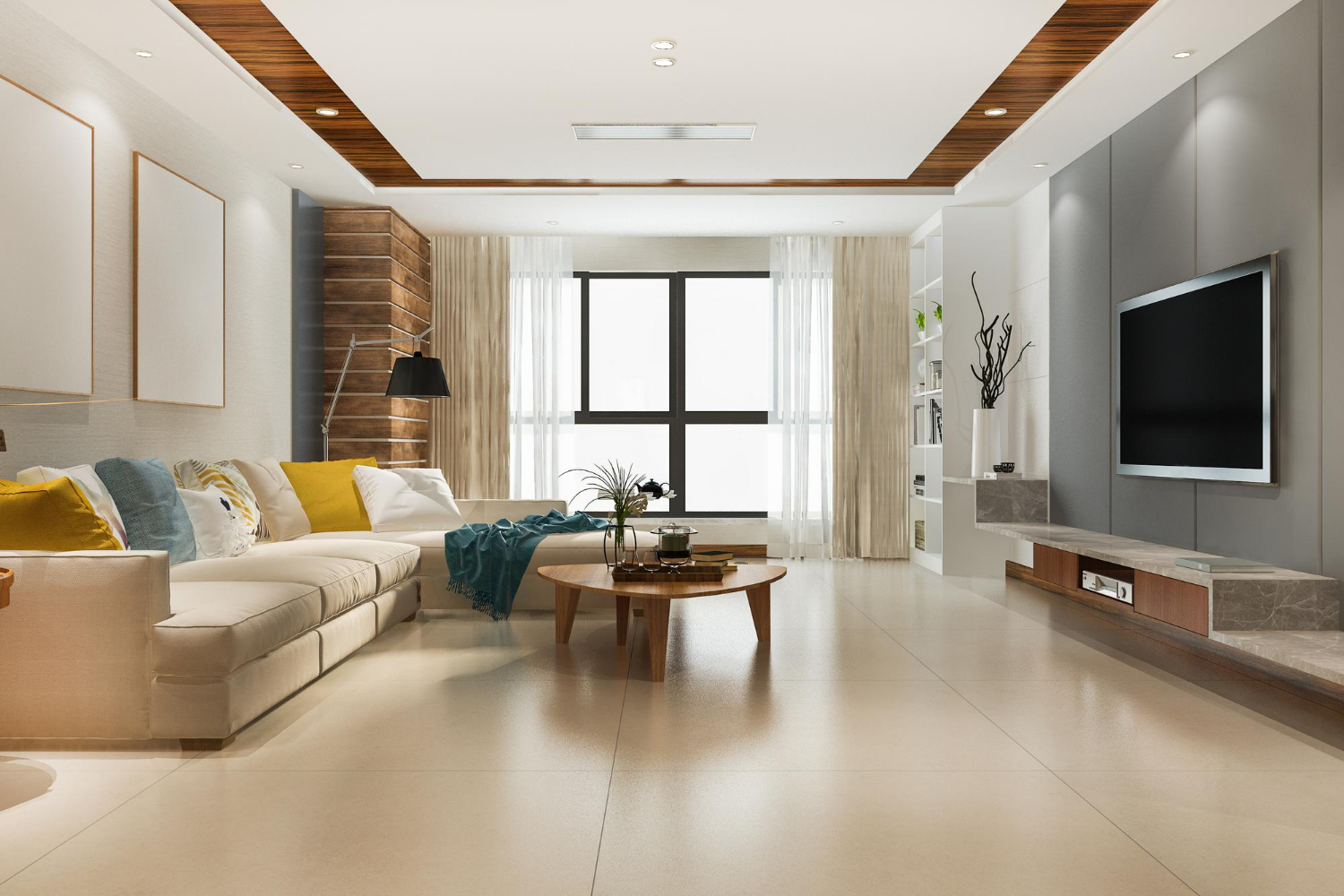
Matte and ultra-matte
The closest thing to raw, unfinished timber. Light scatters rather than reflects, so the grain reads clearly and the floor looks natural rather than coated.
The practical advantage is significant: matte hides fine scratches and dust better than anything else. In a house with dogs, kids, or a lot of traffic through a hallway, that matters every day. It is also comfortably the dominant look in contemporary Melbourne interiors — the South Yarra apartments and Brighton architectural rebuilds we work in are almost all specifying matte or ultra-matte now.
The trade-off is that a matte floor can look flat in a room with limited natural light, and it will not give you the depth that a period home sometimes wants.
Satin
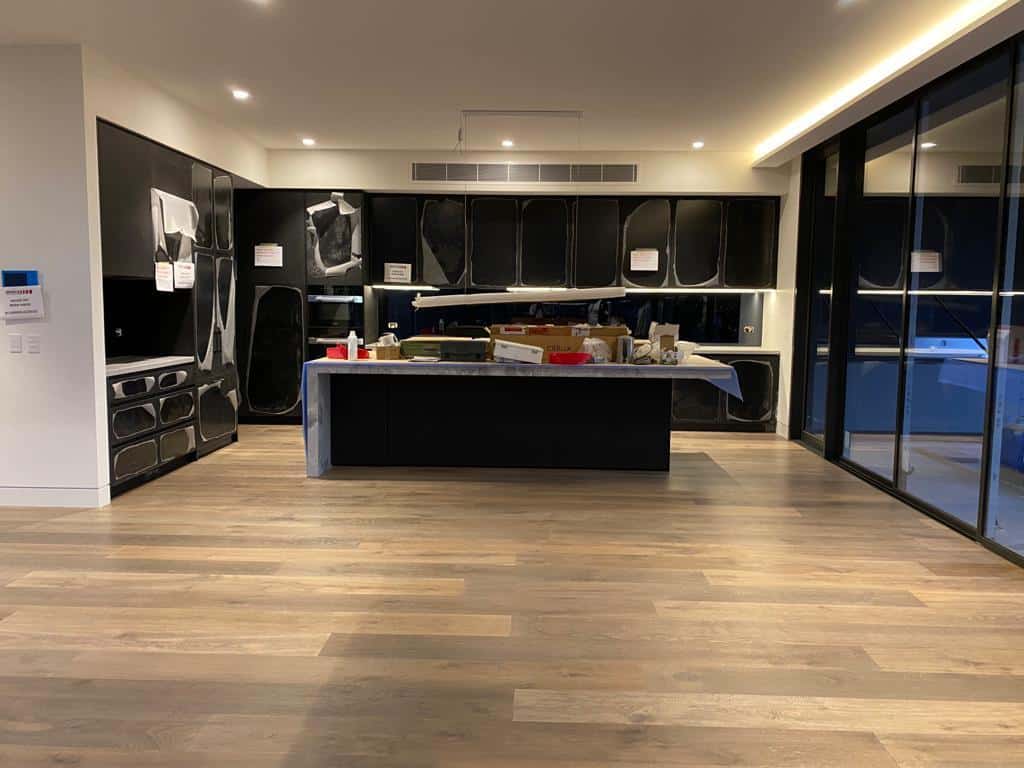
The middle ground and, for most Melbourne homes, the safest choice. A soft, low reflection that gives the timber some warmth and depth without turning the floor into a mirror.
Satin is forgiving. It hides more than semi-gloss, looks better than matte in darker rooms, and suits both period and contemporary interiors. If you are genuinely unsure, this is where we usually point people.
Semi-gloss and gloss
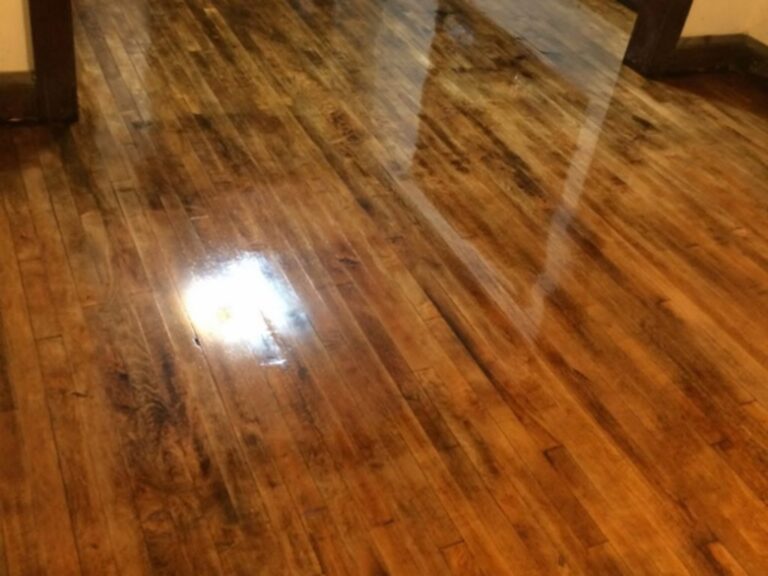
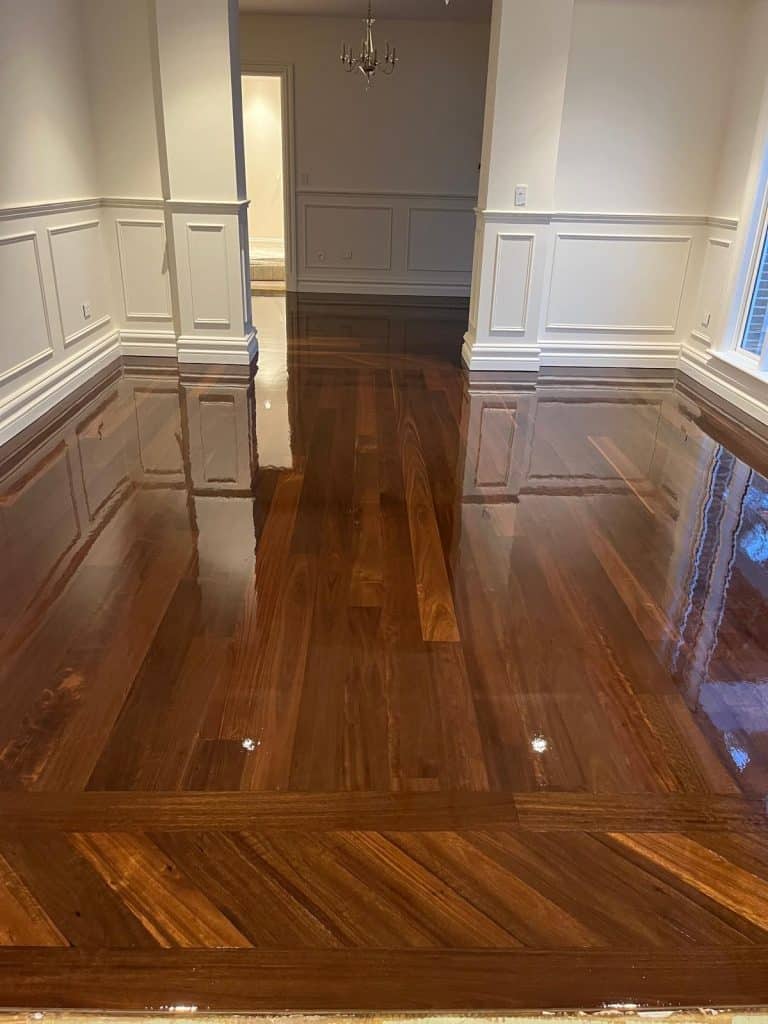
High reflection, real depth, and a formal look that suits some heritage interiors beautifully — the high-gloss finish in a grand Malvern or Toorak entrance hall is a deliberate and very effective choice.
Be honest with yourself about maintenance, though. Gloss shows every scratch, every speck of dust, and every dent. It also highlights any unevenness in the boards or the subfloor, because reflected light travels across the surface and reveals what matte would hide.
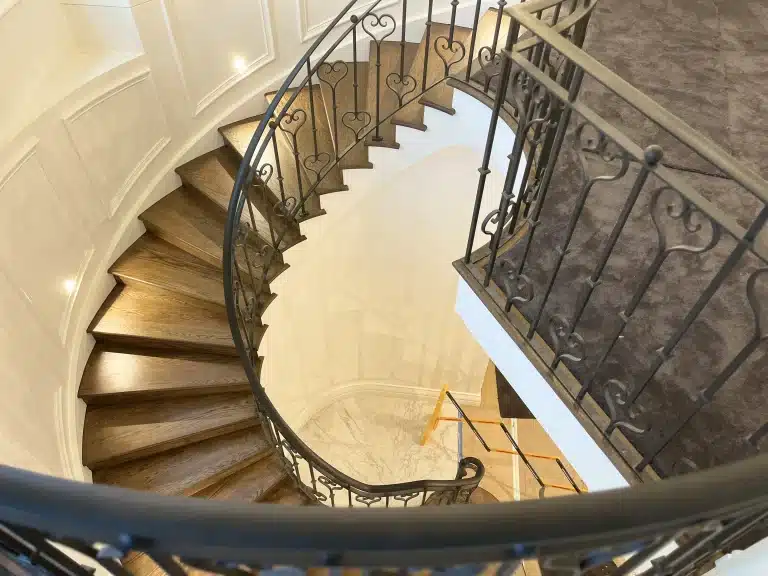
One safety note that matters on our staircase work: gloss on stair treads is slippery, particularly in socks. For staircases we generally recommend a lower sheen, and there are anti-slip additives available where required.
Water-Based vs Solvent-Based: This Changes the Colour
This is the decision most homeowners have never heard of, and it has a bigger effect on the final look than sheen does.
Water-based polyurethane
Dries clear and stays clear. It does not add warmth to the timber, and critically it does not amber or yellow over the years the way solvent finishes do. What you see when it goes down is roughly what you will see in a decade.
That non-yellowing quality is why water-based is the standard choice for pale timbers where the whole point is to keep them pale — Tasmanian oak, blackbutt, and any whitewash, limewash or grey-toned colour work. Put a solvent finish over a whitewash and you will watch it slowly turn cream.
Water-based also has far lower odour, lower VOCs, and faster recoat times, which makes it much more workable in an occupied home. Modern water-based systems are extremely durable — the old assumption that water-based means soft has not been true for a long time.
Solvent-based (modified) polyurethane
Adds a warm, amber tone immediately and continues to deepen over time. On the right timber that is exactly what you want. Baltic pine, jarrah and other red and honey-toned species often look richer under a solvent finish, and for a heritage Fitzroy or Richmond interior that warmth can be the correct historical look.
The trade-offs are real: much stronger odour during application, longer cure times, and that ongoing colour shift, which is a feature if you want it and a problem if you did not know it was coming.
Hardwax oils and penetrating oils
A different approach entirely. Rather than forming a film on top of the timber, these soak in and sit within the surface. The result is the most natural look and feel available, and the great advantage is spot repairability — a damaged area can often be cleaned and recoated locally rather than resanding the whole floor.
The trade-off is maintenance. Oiled floors need periodic re-oiling to stay protected, and they are less resistant to spills and moisture than a good polyurethane. In a wet area or a very busy family kitchen we would usually steer you elsewhere. In a considered interior where the owner is happy to maintain it, an oiled floor is beautiful.
Matching the System to Your Timber
This is where being certified across three manufacturers earns its keep, because different systems genuinely suit different floors.
- Baltic pine — the classic under-carpet find in Surrey Hills, Camberwell and Hawthorn Edwardians. Soft, dents easily, and takes coatings differently across the growth rings. Synteko systems are particularly well suited to heritage Baltic pine, and a warmer finish generally flatters it.
- Tasmanian oak — pale and prone to looking yellow under the wrong coating. Water-based, almost always.
- Jarrah — deep red and naturally rich. Deepens further under a solvent finish, which many owners want.
- Blackbutt and spotted gum — durable, common in newer builds and extensions, and generally best kept close to their natural tone.
- Parquetry and herringbone — grain runs in multiple directions, which makes both sanding and coating more demanding. Loba’s premium systems are where we tend to land on high-end parquetry, and this is not a floor for a first attempt.
The Practical Questions Worth Asking Yourself
- Dogs? Claws mark floors. Matte or satin, and lean toward the more durable systems.
- Young children? Spills, toys, and traffic. Durability and forgiveness over drama.
- How much natural light? A dark room can take more sheen. A bright north-facing living area often looks best matte.
- Are the boards perfectly flat? Old floors rarely are. Higher sheen will advertise every wave.
- Are you living in the house during the work? If so, water-based and dustless sanding will make the week dramatically more bearable.
- Do you want to keep the timber’s current colour, or change it? That single answer often decides water-based versus solvent on its own.
See It on Your Own Floor
The most useful thing we do at a site assessment is show you sample areas on your actual boards, in your actual light. A sheen card in a showroom tells you very little — the same satin finish looks different on Baltic pine in a south-facing Kew hallway than it does on blackbutt in a glazed Mount Martha living room.
Look at samples at different times of day if you can. Morning and evening light change a floor considerably.
Frequently Asked Questions
Which finish is the most durable?
Modern two-pack water-based polyurethanes are extremely hard-wearing and are what we use on most high-traffic residential and commercial work. Durability depends more on the specific product and the number of coats than on water versus solvent.
Does matte wear out faster than gloss?
No — that is a common misconception. Sheen and durability are separate properties. A matte floor simply hides the wear it does get far better.
Can I change sheen without a full resand?
Sometimes. If the existing coating is sound, a screen-and-recoat can change the sheen without removing timber — and it does not use up one of your floor’s limited sands. We will tell you at the assessment whether your floor is a candidate.
How long before I can walk on it and move furniture back?
Generally walkable in socks after around 24 hours and furniture back after about 72, though solvent systems and cold weather both extend that. Full cure takes longer than dry — go easy on rugs and heavy furniture for the first couple of weeks.
Is the smell manageable if we are living there?
Water-based systems have far lower odour and are what most occupied households choose. Solvent-based finishes are strong and usually mean staying elsewhere for a few days.
Why does being certified across three brands matter?
Because the right system depends on your timber species, your traffic, and the look you want — not on which manufacturer a contractor happens to have an account with.
Not Sure Which Finish Is Right? Let’s Look at Your Floor.
Whitewashed Tasmanian oak in a Brighton renovation. Warm satin over Baltic pine in a Surrey Hills Edwardian. Ultra-matte through a South Yarra apartment. Parquetry in a Camberwell hallway that needs a careful hand.
We will measure, talk through the options honestly, and give you a written fixed-price quote after an on-site assessment. No phone estimates, because they are rarely accurate.
Call Iconic Flooring on 0473 837 777, or request a free on-site assessment.
Family-run from 97 Warrigal Rd, Oakleigh since 2012. Bona, Synteko and Loba certified. VBA registered, fully insured, and our own crew on every job — no subcontractors. Serving the eastern suburbs, Bayside and the Mornington Peninsula.
Learn more about timber floor refinishing, staircase renovation, and timber floor installation, or read our guides to how many times a timber floor can be sanded and floor sanding costs in Melbourne.